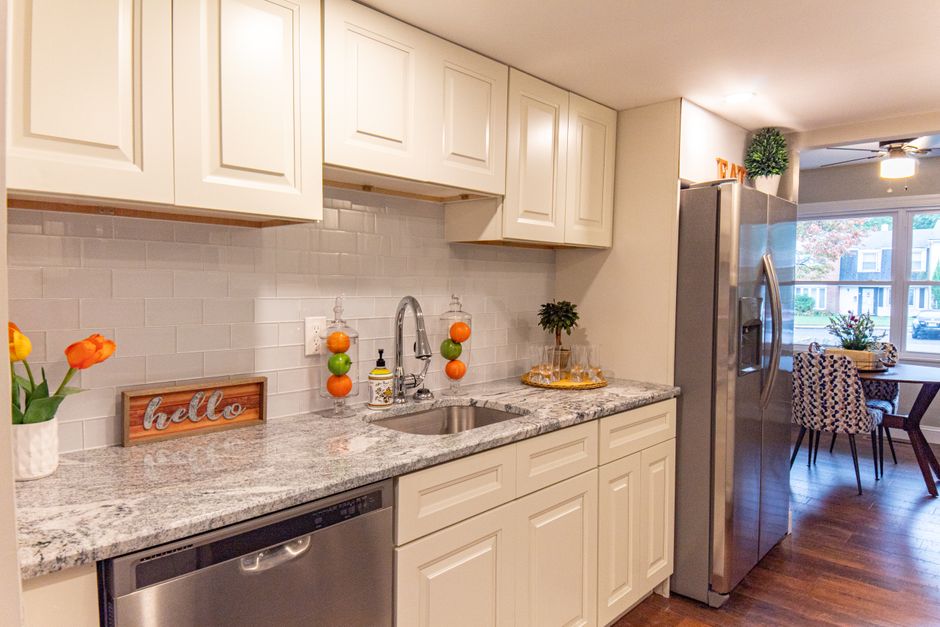

Kitchen Remodeling Carlsbad, CA

Plain notes on kitchen remodeling in Carlsbad, CA: cabinets and counters near salt air, layout, rough-in work and the order of a remodel.

What We Cover

Kitchen Remodeling Carlsbad, CA

A kitchen remodel in Carlsbad, CA starts with the walls, the weather and the way the family cooks. Most of the work is decided before the first cabinet comes off the wall: where the sink drains, how much air the range hood has to move, and how the room sits on the street between the coast and the hills. The crew side of the job is mostly measuring, sequencing and waiting for the right conditions.

The coast changes the materials

Salt air and the marine layer reach well inland across San Diego County. Cabinet boxes, hinges, caulk and counter edges all behave differently in damp air than they do in a dry valley. Homes near Batiquitos Lagoon and Agua Hedionda Lagoon stay damp longer in the morning, and homes up in La Costa dry out sooner. Choosing a sealed plywood box, stainless hardware and a finish that cures hard is a practical answer, not a luxury.

Layout, island and work triangle

A layout is settled with a tape measure and painter tape long before an order goes in. The island, the walkway around it, the distance between sink, cooktop and refrigerator, and the location of the range hood duct all depend on the real walls of the house, which are rarely square. Tract homes from the eighties and newer builds each carry their own quirks in ceiling height and panel capacity.

What goes on inside the walls

The electrical circuit count, the plumbing rough-in and the ducting are the parts nobody sees and everybody depends on. They are inspected before the drywall closes, and the order of trades is fixed by that inspection. The finish layer follows: countertops, backsplash, lighting plan and flooring, each set on a surface prepared for it.

Weekends, fog and the Carlsbad calendar

Paint, grout and caulk dry slowly under a June fog bank, and a week near Carlsbad State Beach reads differently from a week inland. Planning around the weather and around the busy summer streets near Legoland California keeps deliveries and crews moving.

Guides

The pages here cover cabinet finishes near salt air, countertop choices for humid kitchens, layout planning, rough-in work, the week by week order of a remodel, and the late decisions on backsplash, lighting and floors. Each one answers a single question a homeowner in Carlsbad asks.

Latest Guides

A remodeled home kitchen with cabinets and counters

A Seasonal Care Calendar for a Coastal Carlsbad Kitchen

2026-10-06

A new kitchen in Carlsbad, CA does not stay new on its own. The marine layer, a light film of salt and a long dry stretch each summer all work on the surfaces, and a short routine through the year keeps cabinets, counters and fixtures looking the way they did on the last day of the job. This calendar breaks the work into the seasons that matter on the coast.

Why a coastal kitchen needs a schedule

Inland kitchens fight grease and heat. Kitchens near the water add moisture and salt. Salt film is nearly invisible, but it attracts water from the air and holds it against metal and wood. Hinges, drawer slides, the faucet base and the edge of a countertop are the places it settles first. A kitchen in La Costa a few miles from the beach sees less of it than one a block from Carlsbad State Beach, and the schedule below can stretch a little for the drier locations.

Nothing here needs special tools. A soft cloth, a mild dish soap, a bottle of white vinegar, a small brush and a screwdriver cover nearly all of it.

The year at a glance

SeasonMain concernTasks
WinterDamp mornings, standing moistureCheck under the sink, wipe window sills, run the range hood fan, inspect caulk lines
SpringFog and pollenWash cabinet faces, tighten hardware, clean the hood filter, test the sealer on stone
SummerDry heat, direct sunOil wood tops, check the finish near windows, clean the dishwasher and disposal
FallOffshore wind, dust, first rainsCheck hinges and slides, inspect the exhaust cap outside, reseal grout lines

Winter: watch for moisture that stays

Damp air in the winter months shows up first at the sink. Open the base cabinet, set a hand on the floor of the box and feel for dampness, then shine a flashlight along the supply lines and the drain. A drip that is invisible from the front still swells a particleboard floor in a few weeks. Replace a weeping compression fitting right away, since it is a cheap and quick fix compared with replacing a cabinet.

Run the range hood whenever something boils. Steam that drifts to the upper cabinets leaves a cloudy film on the finish, and in a kitchen with a closed window it can stay in the room for hours. The caulk line where the counter meets the backsplash gets a look too. A line that has gone dark, split or lifted at a corner lets water behind the tile, and recaulking takes a short afternoon with a utility knife and a tube.

Spring: wash, tighten, test

After the fog season, wash the cabinet faces with warm water and a drop of dish soap on a soft cloth, working with the grain on wood. Dry right away with a second cloth. Avoid spray cleaners with ammonia, which cloud some finishes, and skip abrasive pads entirely.

Hardware loosens as wood moves through the seasons. Go through every door and drawer with a screwdriver and snug the screws on pulls, knobs and hinges. Stop when the screw is firm, because over-tightening strips the hole in particleboard. Hinge adjustment screws let a door that has dropped a hair be brought back in line.

On natural stone, drop a small amount of water on the surface near the sink. If it beads, the sealer is working. If it darkens the stone within a few minutes, the stone needs resealing, which is a wipe-on job with a penetrating sealer made for that material.

Summer: sun and heat

Long hours of sun through a west window fade a wood finish and dry out a butcher block top. Close the blinds during the hottest part of the day if the cabinets face the glass. Wood tops take a thin coat of food-safe oil or a hardwax product, and the rule is to apply a thin coat, let it soak, and wipe off what is left. A thick coat stays sticky.

Summer is also the time to clean the machines. Run the dishwasher empty with a cup of white vinegar on the top rack, pull the filter and rinse it, and wipe the door gasket. The disposal gets a handful of ice and a little citrus peel. A cleaned dishwasher filter prevents the sour smell that appears when food bits sit in warm damp air.

Fall: the offshore wind and the first rains

The dry Santa Ana winds blow dust and fine grit into everything. Wipe down the tops of the upper cabinets, where dust builds into a gummy layer once cooking steam settles on it. Check the drawer slides by pulling each drawer fully out, and wipe the tracks. A drop of light machine oil on a steel slide is fine, but plastic slides need nothing.

Before the rain returns, walk outside and look at the range hood exhaust cap and the dryer vent. A flap stuck open by lint or a nest lets wet air in all winter. Homes near Batiquitos Lagoon and Agua Hedionda Lagoon get birds and small insects drawn to the warm vent, and a cap with a working flap and a screen keeps them out.

Grout lines between backsplash tiles get a look with a flashlight. A hairline crack or a missing patch lets moisture into the wall. Sealing cementitious grout once a year is a half-hour job and keeps the lines from staining.

Small habits that pay off all year

  • Wipe the counter edge and the faucet base dry after the evening dishes
  • Use a trivet under hot pans, since both laminate and engineered stone can mark or crack from sudden heat
  • Keep a cutting board under the knife, because a knife edge dulls on stone and scars a soft counter
  • Wipe up spills with citrus, wine or oil right away on natural stone
  • Leave the window open a crack when cooking, if the weather allows

Frequently asked questions

How often should stone countertops be sealed?

The water drop test answers that. Some stones go a year or more between coats, and some need it twice a year. Test, then seal when the water darkens the surface.

Is vinegar safe on every surface?

No. Vinegar is fine on the inside of a dishwasher and on stainless steel, but it etches marble, limestone and some other natural stone. Mild soap is the safe default for those.

What causes the white haze on dark cabinets?

Usually a mix of salt film, hard water residue and cooking steam. A damp cloth with a drop of soap removes it, followed by a dry cloth. Repeated haze above the range points to a hood that does not move enough air.

When is it time to call a pro?

A cabinet floor that stays soft after drying, a door that will not hold its alignment after adjusting the hinge, a counter seam that opens, and a drain that gurgles all call for a tradesperson, not another round of cleaning.

A few minutes each season spares the kitchen from the slow damage that salt air and humidity cause.

Read more →

A remodeled home kitchen with cabinets and counters

Living Through a Kitchen Remodel in Carlsbad: Setting Up a Temporary Kitchen

2026-10-06

The first week of a kitchen remodel is the hardest one for the people who live in the house. The sink is gone, the refrigerator sits in the hallway, and dinner has to come from somewhere. A homeowner in Carlsbad, CA who plans the temporary kitchen before demolition day keeps the household running with very little stress. This article answers the questions that come up most often about living through the job.

How long will the kitchen be out of use?

The working kitchen usually disappears for several weeks, and the gap runs from the day the old cabinets come out to the day the new sink is connected and the range is wired. The phases are demolition, rough-in, drywall, cabinets, counters, and finish. The longest stretch without water is the wait between demolition and the countertop installation, because the sink cannot be hooked up until the top is set. Special order cabinets and slab countertops are the two items most likely to stretch that stretch, so the date to watch is when each one is confirmed, not when it is ordered.

The marine layer adds a small amount of slack in this part of San Diego County. Paint and caulk dry slowly on foggy mornings, so a good schedule leaves a day or two of margin around those steps.

Where does the temporary kitchen go?

Pick a room that has an electrical outlet on a separate circuit and a floor that can take spills. A dining room, a garage with a finished floor, or a laundry room all work. La Costa homes with a utility room next to the kitchen have an advantage, because the washer hookup gives a water source and a drain for a basic rinse station. Carry water in jugs if there is no hookup, and use a plastic tub as the sink with a bucket underneath.

A workable temporary setup includes:

  • A refrigerator moved to a spot near an outlet, with a clear path around it
  • A folding table or a spare dresser as a counter
  • A microwave, a toaster oven and a single burner hot plate
  • A coffee maker, a kettle and a drying rack
  • A plastic bin for dishes, one set per person, and a second bin for pots
  • A small trash can with a lid and a bin for recycling

Is it safe to cook during the remodel?

Cooking with a hot plate or an electric skillet is fine if the cords are rated for the load and plugged straight into a wall outlet. Do not run a hot plate off an extension cord shared with a refrigerator. A single circuit holds only so much, and a breaker that trips at dinner time often takes the freezer with it. The crew can run a temporary outlet from the panel if the house has no good circuit near the temporary kitchen.

Dust is the bigger issue. Demolition throws fine drywall and wood dust into the air, and it travels through ductwork. A good crew hangs plastic sheeting from floor to ceiling with a zipper door, tapes the edges, and sets a fan in a window that blows air out. The supply and return registers in the work area get covered. Food stored in the house stays sealed during demolition days, and counters used in the temporary kitchen get wiped before use.

What happens to the pets and kids?

Work areas with open walls and exposed nails are no place for either. Gates at the doorway to the work zone keep small children out, and pets do better in a quiet room with the door closed during the loud days. Demolition and tile cutting are the noisiest steps. Many families near Legoland California plan school holidays or a trip for those days, and that works well because the crew has the whole house to itself.

How does the crew protect the rest of the house?

A prepared crew lays rosin paper or a floor protection film along the path from the kitchen to the door. Hardwood in the hallway gets a layer of hardboard on top of the paper. The crew carries materials through a single route, which is usually the front or garage door, and the route is cleared of furniture and framed art before the first day.

The tools stay in a set spot. A saw station outside, near the garage, keeps most of the cutting dust away from the interior. Wet saws for tile run outdoors on a plastic tarp.

What decisions are made during the job?

Some choices cannot wait until the end. These come up while the walls are open:

  • Outlet and switch positions, which are marked on the studs with tape or a marker
  • Light fixture locations, including the under-cabinet lighting runs
  • The height of the backsplash tile and where it stops
  • The stub position for a gas line or a water line to a refrigerator
  • Any repair to damaged framing, subfloor or old plumbing that shows up behind the walls

A homeowner who is reachable during the rough-in stage saves days. A question about where to put an outlet for the island that waits until the weekend holds up the electrician, the inspector and everyone behind them.

How do inspections affect daily life?

An inspector needs access to the open walls, so the plastic sheeting comes down or opens, the room is clear, and someone is home or the crew arranges entry. Inspections fall in the middle of the job. The electrical and plumbing rough-in pass before the drywall goes up, and the final comes after the work is finished. A failed item is a short list of fixes, and the reinspection takes another visit.

What about noise and neighbors?

Crews start after the hours set by local rules and stop before evening. A heads up to the neighbors on both sides and across the street is a small courtesy that goes a long way. Parking is the usual friction point. A dumpster in the driveway or on the street needs space, and the crew's trucks need a spot that does not block mailboxes. Near Carlsbad State Beach, where weekend visitors fill the streets, a weekday schedule keeps the work moving.

How can the family eat well in the meantime?

Plan meals that need one appliance at a time. A slow cooker, a toaster oven, and a rice cooker cover a lot of dinners. Sheet pan meals in the toaster oven or a countertop oven are easy. Grilling outdoors extends the options, and Carlsbad has mild evenings for it most of the year. Wash dishes in a bathroom tub or a utility sink, never in a bathroom basin that drains slowly. Paper plates for the messy days are a reasonable trade for the saved water and effort.

What should be ready the day before demolition?

The checklist is short and mostly physical:

  • Empty every cabinet and drawer, including the high shelf over the refrigerator
  • Move small appliances, food and dishes to the temporary kitchen
  • Take pictures off nearby walls, since vibration shakes frames loose
  • Clear a path from the kitchen to the exit
  • Confirm the water shutoff valves and the electrical panel labels
  • Agree on a daily start time and a place for the crew to store tools

What does the last week feel like?

The last week brings the visible progress: the sink is set, the faucet is on, the range slides in, and the doors are hung. Water comes back first, then the dishwasher, then the refrigerator moves to its final spot. The punch list follows, a list of small touch ups such as door alignment, a scratch on a panel, a caulk line that needs tooling. A walk through the room with a flashlight held low shows most of them.

Planning the temporary kitchen before demolition turns the disruption into a manageable stretch, and the rest of the job goes more smoothly when the household is fed, rested and out of the way.

Read more →